


THE IMPACT OF THE ACUTE NATURE OF A PARENT’S DISEASE ON FAMILY FUNCTIONING
Traumatic brain injury (TBI) of a parent and its sudden character is a dramatic life event. In front of this new and unprecedented situation, the family experiences real changes in its everyday life. Th e situation brings imbalances in the family system in terms of communication, problem solving, emotional involvement and response. Th is requires adoption by all family members of a conduct designed to maintain optimal family relationships and to assure the role of restoring emotional balance. Th e most important factor regarding family balance is the supporting parent.
INTRODUCTION
Because the impact of the sudden appearance of one of the parents’ disease through brain injury (TBI) on family functioning as a system is a less studied area inthe world while in our country, it represents a novelty, I proposed, through this research, to capture the changes that may occur in families when one parent suffers a TBI. Generally, most family studies in the world focused on chronic diseases and on their effects in time and not on the immediate impact.
In this study we endeavoured to understand how the supporting parent is affected by the news that his/ her life partner had a TBI and how family functioning is influenced by his/her emotional response. Most studies that focused on those who provide care and on the burden associated with caring suggest that these people have a low level of physical and mental wellbeing, as well as higher rates of stress, isolation and depression.
Recent studies show that brain injury is a significant source of caregivers’ morbidity. Carers of those with severe TBI are subject to extreme stress that is associated with the injury as such. (Granacher, 2003).
One of the first scientists who studied the impact of a family member’s TBI on family functioning was Lezak (1978). She observed the changes and phenomena facing the members of family with a person with TBI, and these included social isolation, depression, anxiety, anger and guilt.
Clinical experience and empirical studies have shown that families face many difficulties in adapting to the overall experience of TBI on a member (Lefebvre, & al., 2005). In particular, the partner faces a formidable challenge as the main caregiver of the sick person. Responsibility of caring involves significant risks, both for the one who cares, as well as for the marital relationship itself (Wood, 2005). The healthy partner may develop affective or anxiety disorders in the months when he/she takes care of the sick partner. (Chwalisz, 1999).
Some authors talk about the extent of the impact of TBI on the family. Brain injury has a devastating impact on the family system and places a significant demand on the emotional resources of each family member individually. Infinite emotional reactions are
at stake, experienced by the partner, the survivor and by the whole family who is trying to adapt to the new situation (Uomoto & Uomoto, 2005).
Other authors talk about the burden carried by the supporting parent in this situation. In many ways, the supporting parent bears the heaviest burden when his/her partner suffers a TBI. An equal partnership between two adults was damaged and the healthy partner is often placed in the role of caregiver of both the sick partner and of the family, when they have children. This situation often results in financial burden, loss of support and isolation (Cavallo & Kay, 2005). The burden of caring for a person with TBI, which the healthy partner bears, is a complex phenomenon that consists of many aspects: physical (fatigue), cognitive (guilt, loss of support from the partner), and, most importantly, emotional (despair). Consequently, there are many psychological and environmental variables, which may have an impact on this burden (Chwalisz, 1999).
RESEARCH QUESTIONS AND HYPOTHESES
In an attempt to study the family environment and the complexity of family reactions when it is faced with an illness that brings confusion, helplessness, frustration, deprivation, fears, questions, we decided to analyse
- the impact of TBI on the patient’s spouse,
- his/her reaction to this the event,
- how this reaction together with the event itself influence the overall health of the family.
HYPOTHESES
Two hypotheses have been chosen, namely:
- Supposing that between family wellbeing (physical and emotional quality) and family overall operation there is a positive meaningful relationship.
- Supposing that between the supporting parent’s degree of depression and the family wellbeing there is a significant negative correlation.
MATERIALS AND METHODS
The work is an extension of the study began within the frame of the multicentre international research project “Children of Somatically Ill Parents”, COSIP, carried on in the Bucharest Clinic of Child and Adolescent Psychiatry and coordinated by the University of Hamburg.
This paper expands the data obtained from the application of a battery of questionnaires at baseline (T0), in hospital, to supporting parents.
METHODS AND MEANS USED
The present study included 58 families with a parent with acute, moderate or severe brain and / or spinal cord injury. The group of sick parents consisted of 23 mothers and 35 fathers and the surveyed respondents were 23 fathers and 35 mothers, aged
31-60 years. The average age was 45 years.
The research methods used in the study were interview and observation, and standardized questionnaires as research tools.
Supporting parent questionnaires were BDI (Beck Inventory depressed), FAD (Family Assessment Device), SF-8 Health Survey (A Manual for Users of the SF-8 TMHS).
To find out how the family functions, it was examined with the Family Assessment Device (FAD). FAD (The Family Assessment Device by Epstein, Baldwin & Bishop, 1983) is a questionnaire that assesses family functioning as a whole. It contains 60 items and is based on the McMaster Model of Family Functioning (Epstein, Bishop & Levine, 1978). Response options are on a Likert scale with four levels: “strongly agree”, “agree”, “disagree”, “strongly disagree”. High scores indicate a significant degree of family dysfunction. Besides overall functioning, six subdivisions of family functioning are differentiated. The dimension “problem solving” measures the ability of the family to solve the problems that it faces. “Emotional involvement”, assesses the level of interest that some family members manifest in the work of the other members. “Affective Responsiveness” refers to the family’s ability to respond emotionally to each other in an adequate manner. “Communication”, evaluates the verbal communication between family members in terms of clarity in content and meaning. “Behavioural control” includes methods used in the family to express and maintain rules. “Roles” dimension measures repetitive patterns of behaviour that each individual accomplishes in the management of family life. Different profiles of family dysfunction based on these sub dimensions may establish the direction of family intervention.
Health Survey (SF8), version Medical Outcomes Health Survey (Ware, Kosinski, Dewey, & Gandek,
2001), measures the physical and emotional quality of life. The questionnaire covers eight aspects of health: physical functioning, role limitations due to physical problems, physical pain, general health, vitality (energy / fatigue), social functioning, role limitations due to emotional problems, mental health (psychological distress and mental state of well ) and two summary scales for physical component and mental component.
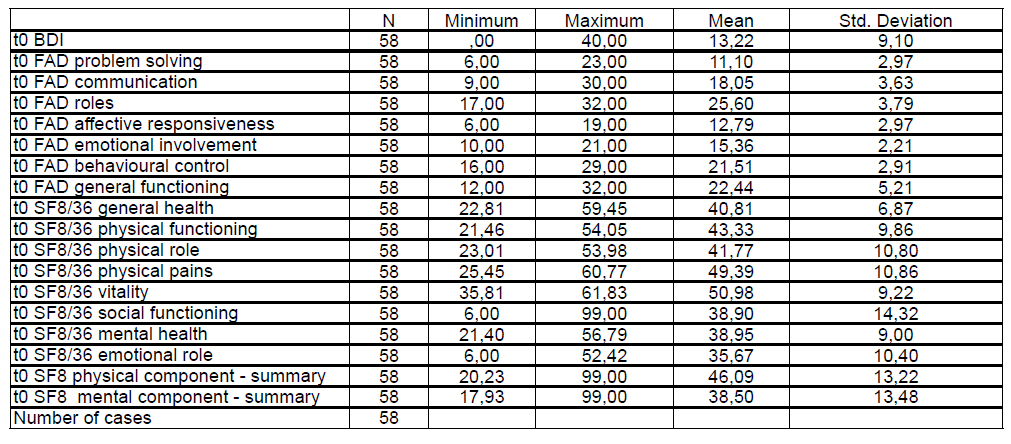
Table 1. Descriptive statistics (BDI, FAD, SF8)
Depression level of the supporting parent was measured with the Beck Depression Inventory (BDI). This tool highlights the supporting parents’ mental health by reflecting their status at the time of application. The questionnaire is divided into 21 items, with responses on a four-point scale from 0 (absent) to 3 (severe).
STATISTICAL PROCEDURE
Data were analysed using SPSS 16.0 and include the calculation of average indicators of variation and Pearson correlation coefficient.
PRESENTATION OF RESULTS
In an attempt to identify dimensions in the supporting parent that could predict failures within the family, we analysed data concerning – the welfare of the family (physical and emotional quality of life) (SF-8), family functioning as a whole (FAD) and supporting parent depression (BDI) (Table 1).
Analysis of the results gives us an insight into how the supporting parent lives the event and the influence that his/her condition has on family functioning.
Average BDI score was M = 13.22, SD = 9.10. In other words, it highlights the state of depression that appreciates supporting parents with poor mental state. Family members may feel trapped, isolated, abandoned by relatives, and even abused, which often materializes in chronic or recurrent depression …
(Cavallo & Kay, 2005). After analysing the whole family functioning (FAD), we see low scores on emotional involvement components (M = 15.36, SD = 2.22), affective responsiveness (M = 12.79, SD = 2.97), communication (M = 18.05, SD = 3.63) and problem solving (M = 11.10, SD = 2.97). Supporting parents appreciate that they have difficulties in solving the problems they are faced with. Sudden shock related to a TBI life partner invalidates the supporting parent’s ability to find satisfactory solutions to problems. Incapacity also occurs because of inadequate emotional response expressed by the supporting parent’s inability to mobilize his/her emotional resources and to remain objective and reasonable in relation to the situation. The family’s lack of flexibility concerning the changes, which it is subject to daily, increases stress and family disorganization and affects relations between its members.
Communication in the family, which means the ability to listen to each other and to clearly express personal needs and expectations, suffers. Information exchange and sharing thoughts and ideas is affected. When a family is traumatized by sickness or disability, it often closes itself, refusing to talk about the event or to communicate their fears, needs and expectations (Power & DellOrto, 2004).
The affective responsiveness subdivision, measures how family members show tenderness, care and affection to each other. In our study, low emotional response to other family members, a result of affective responsiveness component, affects the family’s emotional balance.
In terms of emotional involvement, which assesses the level of interest that some family members manifest to the work of others, there is also a low score. This means that the prioritization of the event decreases the interest in the activities and concerns of the others.
Families’ well-being translated by the quality of physical and emotional life (SF8), records low scores in social functioning components (M = 38.90, SD = 14.32), mental health (M = 38.95, SD = 9 , 00), emotional role (M = 35.67, SD = 10.40). In the mental component-summary, there is a low score, too (M = 38.50, SD = 13.48).
The analysis captures the psychological distress, role disability and impaired social life caused by emotional problems summarized by the poor quality of life and health.
The impaired social life of the supporting parent, corresponding to the “social functioning” component and translated by the absence of normal social activities, contributes to a decreased well-being of the family. Regular activities in which the members used to be involved because they were engaging, pleasant, attractive, now have diminished or even disappeared. Their place is often taken by social withdrawal and even isolation. The partner of the person with TBI, faces dramatic decrease in his/her private time. The tendency is to meet the care needs of partner, to act the new role, and, if there are children in the family, to meet their reactions to the new situation. The partner often loses contact with previous social network – there is no time for former regular activities
(Chwalisz, 1999).
The presence of psychological distress generates emotional problems that are summarized in states of nervousness and unadapted emotional reactions, which affect the quality of life.
Role limitations due to emotional problems are also recorded, expressed by diminished personal performances in normal activities.
Immediate consequences caused by the intervention of the traumatic event on the supporting parent generate long-term effects on all family members. Illness of a family member has an impact on the family’s affective climate. (Aldfer & Stanley, 2012).
HYPOTHESIS 1
Analysing correlations between physical and mental components of SF8 with FAD components, we see that there is a significant negative correlation between the emotional involvement subdivision of the FAD and the corresponding physical component (r = – .289, p <0.05) and mental component SF8 (r = – .303, p <0.05) (Table 2).
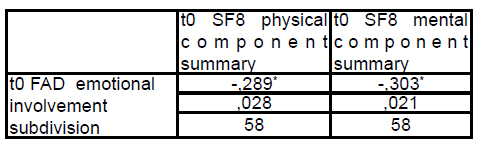
Table 2. Correlation between SF8 (physical and mental component) and FAD (emotional involvement subdivision)
The higher the emotional involvement of the supporting parent is, i.e. it is misfit to reality, the lower the physical (-, 289) and mental (-, 303) wellbeing of the family is.
Kreutzer & al. (1994) found higher rates of distress in almost half (47%) of the questioned supporting persons, a high level of anxiety in 1/3 of respondents, and depression, irritability and somatic pain in 25%. They also identified significant levels of emotional imbalance months and even years after the injury in a percentage of respondents between 40% and 50% (Kreutzer, Gervasio & Camplair, 1994).
If the supporting parents identify themselves with and take over the patient’s emotions, they invalidate their own ability to provide an appropriate emotional response.Thus, the two poles of the family, represented by the two parents, go adrift. The supporting parent’s ability to respond adequately being affected, the family will be unable to find the needed balance and strength to manage the dramatic situation it is facing.
When a person suffers a TBI, the family reactions are always changing. So are their expectations that suffer changes, too (Head Injury: A Family Guide, 1994).
In an explorative approach, a significant negative correlation (r = – .259, p <0.05) was highlighted between the mental component of the SF8 and the roles subdivision of the FAD (Table 3).
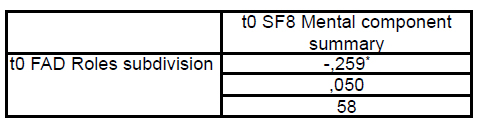
Table 3. Correlation between mental health (SF8) and roles (FAD) status.
One or more family members will be required
to assume the role of income provider. When the affected person is the home keeper, the roles are reversed again. Obligations and responsibilities should be shared among the other family members (Head Injury: A Family Guide, 1994).
HYPOTHESIS 2
Following the analysis of correlations between BDI and the physical and mental component of the SF8, we observe a strong correlation between them (r = -, 516, p <0.01, r = -, 485, p <0.01) (Table 4).
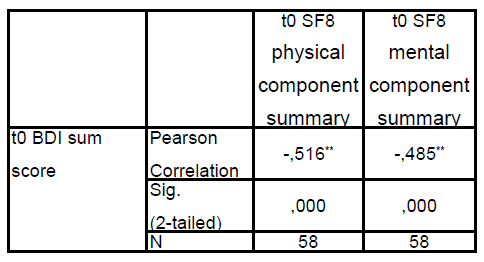
Table 4. Correlations between BDI and summary components – physical and mental (SF8)
Changes in roles – i.e. those patterns of behaviour that one parent fulfils in the management of family life –influence the family mental state. This may be translated in the inability of family members to reorganize and adapt themselves to the demands of the new situation. For example, if the person who suffers a TBI is the father, the family’s main source of income, the family will have to reorganize so that his role is taken over by another member. In other studies on family functioning after TBI, similar dysfunctions have been reported. Ergh, Rapport, Coleman & Hanks (2002), noted strained relationships, role and communication disruptions, delays in rehabilitation and decreased availability of the caregiver.
In a longitudinal study, Brooks & al. (1986) speak about a high degree of distress, which came less than a month after TBI and maintained for years (Brooks, Campsie, Symington, Beattie, & McKinlay, 1986). For example, Brooks & al. (1986) identified a feeling of severe burden in 90% of relatives of a person with TBI, at 5 years after the injury.
Families with a member with TBI must become aware of the inevitable changes that will occur in the family structure. If the person who suffers the TBI is the one who is providing the basic family revenue, changes will occur concerning the marital and family relationship, the income, economic stability and social
**. Correlation is significant at the 0.01 level (2-tailed).
The higher the depression of the supporting parent is, the lower the physical and mental component. It means that the supporting parent’s depression is a real factor in influencing and generating family life quality. Depression influences and is influenced by family relationships (Whitton, 2011).
Livingston & al. (1985), identify a high rate of distress and discord among family members, between
25% and 52%, for a range of indicators including depression and anxiety. Moreover, Linn, Allen & Wheeler (1994), identify a high level of depression and anxiety in both patient and partner, in a study conducted one year after TBI.
A high rate of burden, with anxiety, depression, depressed level of social adaptation, psychosomatic disorders and alcohol and drugs, was highlighted among relatives of family member with TBI (Camplair, Kreutzer & Doherty, 1990).
Relationships between family members are negatively affected by TBI, and are highlighted by the low level of satisfaction and longevity, disruption of family roles and lowering of the communication level among family members (Kreutzer, Gervasio & Camplair, 1994). As a result, there may be changes in family functioning in terms of communication, affective involvement, general functioning and changes in roles (Anderson & al., 2002).
CONCLUSIONS
Data presented in this study and their analysis gives us a picture of what the sudden and unexpected occurrence of an event in the life of a family means, the immediate reaction to the initial impact and its consequences on family dynamics.
It is noted that at the sudden appearance in a family of a brain injury in one of the parents, their partner is going through a multitude of conditions that are reflected in the family dysfunctions.
Brain injury is associated with a number of physical, cognitive, emotional, personality and interpersonal consequences, while social and recreational activities are altered, which can have a huge impact on both the patient and the family members. Because of these consequences which often go on for months or even years, changes occurring in the family follow the changes that the patient is facing (Uomoto & Uomoto, 2005).
The event has an impact on family communication, on the mental and emotional state, on intra-family relationships and on the family as a whole. The occurrence of depression in the supporting parent, the family is less able to cope with the situation. Any influence in our lives has an impact on our mind, whether or not we are aware of this influence (Oddenino, 1995). Depression shapes how couples and families function […] and has many long-term effects both on families and on individuals (Coleman, Ganong & Warzinik, 2007). In other words, depression has a negative impact on the enthusiasm for life and on the quality of life of the individuals and of their families.
This gives us a milestone in understanding how such an event changes the way the supporting parent relates, communicates and interacts in the family. It also gives us information about the way his/her availability concerning the activities and concerns of the others changes as well as on the way his/her own availability changes.
Social relationships are affected, they become reduced and sometimes they even disappear. Concern and involvement in activities that used to be enjoyed is missing now.
Sudden illness of a parent with TBI is a very stressful life event, which, by its unexpected arrival, has multiple effects on the family. The perception of the event is closely linked to the emotional state of the supporting parent, too. His/her mental state, expressed by the depression registered at BDI is an important factor in the welfare of the family. The supporting parent’s adjustment, and of the family as a whole, to the new and unique situation are major factors for psychological and physical well-being of the family.
The individual and the shared desires and beliefs of family members, the ability to communicate clearly and directly, available resources, the development stage of the family and of its members and the specific characteristics of the disease, are important factors in how families respond to illness and how they organise themselves in order to deal with the new situation (Aldfer & Stanley, 2012).
Specialist literature, gives us some guidelines on the consequences of TBI on the family and on its members. More research can improve the understanding of these effects and their consequences. The limit of the present study is given by the fact that it only summarizes the baseline moment, which affects the amount of information that could have resulted. Therefore, deepening the study by expanding it and following the dynamics of its consequences in time would be an asset for implementing a specialized service integrated in medical services.
BIBLIOGRAPHY
- Aldfer, M. & Stanley C. (2012). Health and Illness in the Context of the Family in Handbook of Health Psychology, 2nd Edition, ed. Andrew Baum, Tracey A. A. Revenson, Jerome Singer.
- Anderson, M.I., Paramenter, T.R. et al. (2002). The relationship between neurobehavioural problems of severe traumatic brain injury (TBI, family functioning and the psychological well- being of the spouse/caregiver: path model analisys. Brain Injury16, 743-757.
- Beck, A. T., Steer, R. A., Brown, G.K. (1996). Manual for the Beck Depression Inventory sec. ed., London: Harcour Brace & Co.
- Brooks, N., Campsie, L., Symington, C., Beattie, A., & McKinlay, W. (1986). The five year outcome of severe blunt head injury: A relative’s view. Journal of Neurology, Neurosurgery and Psychiatry, 49, 764-770.
- Camplair, P.S, Kreutzer, J.S., & Doherty, K., 1990. Family outcome following adult traumatic brain injury : A critical review of the literature. In J.S. Kreutzer & P. Wehman (Eds.), Community integration following traumatic braininjury, Baltimore: Paul H. Brookes, 207-223.
- Cavallo, M., Kay, T. (2005). The Family Sistem in Textbook of traumatic brain injury, American Psychiatric Pub., 1st ed., ed. Silver, J.M.; McAlister, T.W.; Yudofsky, S.C.
- Chwalisz, K. (1999). The Problem of comorbidity in spouses in The evaluation and treatment of mild traumatic brain injury, ed. Varney, M.R., Roberts, R.J.
- Coleman, M., Ganong, L.H., Warzinik, K. (2007). Family Life in 20 th – Century in America.
- DSM-IV-TR, (2003). Manual de diagnostic si statistica a tulburarilor mentale, Bucuresti: Asociatia Psihiatrilor Liberi din Romania.
- Dumitru, G. (2004). Statistica pentru psihologi. Bucuresti: Ed. Trei.
- Epstein, N., Bishop, D. & Levine S. (1978). The McMaster model of family functioning. Journal of Marriage and Family Counseling, 4, 19-31.
- Epstein, N.B., Baldwin, L.M., Bishop, D.S. (1983). The McMaster Family Assessement Device. J Marital Fam Ther; 9: 171-180;
- Ergh, T., Rapport, L., Coleman, R. & Hanks, R. (2002). Predistors of caregivers and family functioning following traumatic brain injury : Social support moderates caregivers distress. Journal of Head Trauma Rehabilitation, 17(2), 155-174.
- Granacher, R.P. (2003). Traumatic brain injury – Metods for Clinical and Forensic Neuropsychiatric Assessement, CRC Press LLC.
- Head injury: a family guide. (1994). SC Department of Disabilities and Special Needs – Head Injury Division, Columbia.
- Kreutzer, J.S., Gervasio, A.H. & Camplair, P.S. (1994). Primary caregivers psychological status and family functioning after traumatic brain injury. Brain Injury 8(3), 197- 210.
- Kreutzer, J.S., Gervasio, A.H. & Camplair, P.S. (1994). Patient correlates of caregivers’distress and family functioning after traumatic brain injury. Brain Injury 8(3), 211-230.
- Lefebvre, H, Pelchat, D., Swaine, B., Gelinas, I. et al. (2005). The experiences of individuals with a traumatic brain injury, families, physicians and health professionals regarding care provided throughout the continuum. Brain injury 19(8): 585-597.
- Lezak, M.D. (1978). Living with the caracterologically altered brain injured patient. Journal of Clinical Psychiatry 39: 592-598.
- Linn, R.T., Allen, K., & Willer, B.S. (1994), Affective symptoms in the chronic stage of traumatic brain injury : A study of married couples. Brain Injury, 8, 135-147.
- Livingston, M.G, Brooks, D.N. et al. (1985). Patient outcome in the year following severe head injury and relatives psychiatric and social functioning. Journal of Neurology. Neurosurgery and Psychiatry 48, 876-881.
- Oddenino, K. (1995). Depression: Our Normal Transitional Emotions.
- Power, P.W., DellOrto, A.E. (2004). Families Living with Chronic Illness and Disability: Interventions, Challenges and Opportunities.
- Uomoto K.P, Uomoto J.M. (2005). Impact of Traumatic Brain Injury on the Family and Spouse. Brain Injury Association of Washington.
- Ware, J. E. & Kosinski, M. (2001). SF-36R physical and mental health summary scales: A manual for users of version 1. Second Edition. Lincoln, R.I.: QualityMetric Inc.
- Ware, J. E., Kosinski, M., Dewey, J. E. & Gandek, B. (2001). How to score and interpret single- item health status measures: A Manual for Users of the SF-8TM Health Survey. Lincoln, R.I.: QualityMetric Inc.
- Whitton, S.W. (2011). Depression in the Family in Encyclopedia of Family Health, Vol. 1, ed. Martha Craft-Rosenberg, Shelley-Rae Pehler.
- Wood, R. L., Liossi, C. & Wood L.M. (2005). The impact of head injury neurobehavioural sequelae on personal relationships: preliminary findings. Brain Injury, 19(10): 845–853.