THERAPEUTIC STRATEGIES IN CHILDHOOD EPILEPSY
Available antiepileptic drugs:
Gabapentine
Lamotrigine
Levetiracetam
Oxcarbazepine
Tiagabine
Topiramate
Vigabatrin
Felbamate
Pregabalin
Stiripentol
Carbamazepine
Valproate
Future:
Zonisamide Rufinamide
PHENYTOINE PHENOBARBITAL
How to choose AED?
Secificity in children
- Epileptic syndromes are different than in adults
- Take in account
- changes due to physiological development and brain maturation
- abnormal cortical organisation and epileptogenesis: dysplasia, heterotopic neurons.
- response to AED and side effects are different
- learning and cognitive functions are major concern
AED and cognition
Avoid
- Phénobarbital: effect on global IQ
- Phenytoin
VPA& CBZ: seem to have mild effects on atention and executive function
TPM: mood disorder, speech regression
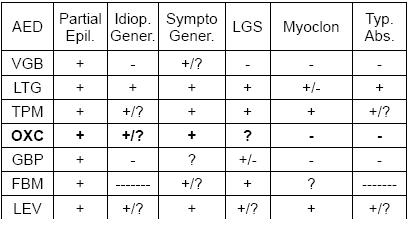
LVT: no data in children (sedative effects) LTG and OXC: no effect?
Define the epileptic syndrome
- Age of onset
- Familial and personal history
- Electro-clinical semiology – Seizure type (partial, generalised)
A good EEG is better than repeated EEG
- Etiology: Idiopathic or symptom atic/cryp-togenic epilepsy
- Brain imaging: focal versus diffuse or multifocal lesion.
- Neurological or genetic disease
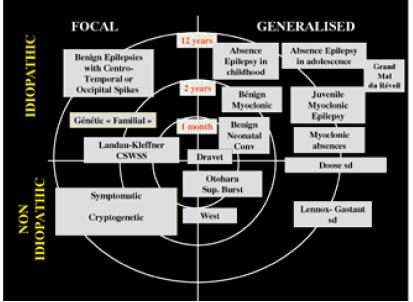
Symptomatic and Cryptogenic epileptic sd in children and adolescent
often chronic and refractory epilepsies effect on cognitive functions ++ polytherapy may be necessary absences or myoclonics: VPA, LTG generalised tonic-clonic seizures or partial seizures: most of AED are effective: PHT, CBZ, VPA, LTG, OXC, LVT, TPM.. Choose first an effective AED with no significant enzymatic induction, and with low rate of adverse effect Partial Symptomatic or cryptogenic epilepsies: “For initial monotherapy for complex partial seizures, carbamazepine and oxcarbazepine were treatments of choice, with valproate also first line.”
Tretment of pediatric epilepsy: European expert opinion, 2007. Wheless et al. Epileptic Disord. 2007
Surgery?
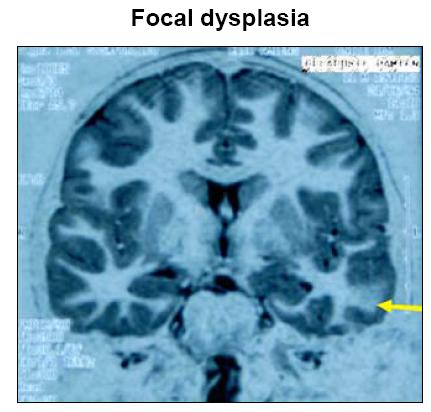
Surgery must be early discussed if: Chronic Refractory epilepsy Focal seizures or secondary generalised seizures Focal lesion: focal resection, lobectomy
Rasmussen: Hemispherotomy not in generalised epilepsy: callosotomy
Mesio-Temporal Epilepsy
Febrile seizures → Temporal Epilepsy
Partial and complex partial seizures
Normal neurological examination
Hipocampal sclerosis: MRI, SPECT, PET 90% refractory epilepsy
Surgical approach

13 years
Partial seizures
Gelastic seizures
Hyperphagia
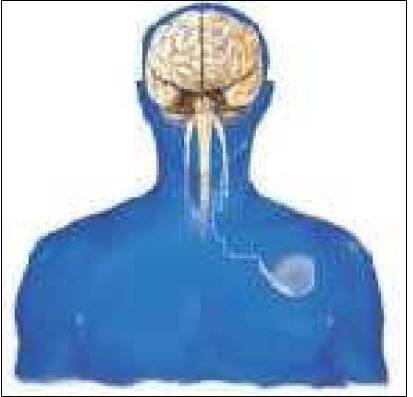
Vagal nerve stimulation
For non surgical refratory epilepsy Lennox-Gastaud sd
Dravet sd
Non surgical focal lesion
Plurifocal epilepsy
Refractory absences
Adverse effects:
Transitory Cough
Respiratory effect during sleep (Heberlé,
Berquin et al Epilepsia 2003)
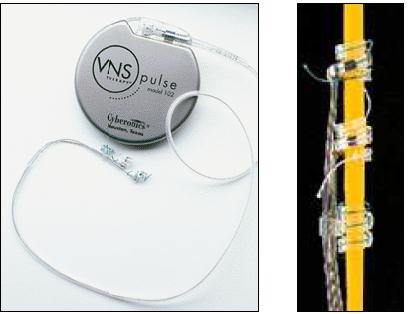
Vagal nerve stimulation
Steroids (po, IV)
West
Lennox-Gastaut
Doose
Landu-Leffner
ESESS
Ketogenic diet
Catastrophic epilepsy
Rasmussen hemispherotomy
IV Immunoglobulines? Plasmapheresis?
Idiopathic generalised epilepsies in children and adolescent
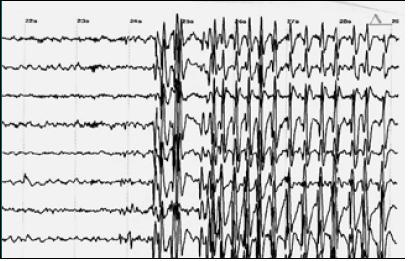
Childhood absence epilepsy
Epilepsy with myoclonic-absences
Juvenile Myoclonic Epilepsy
AED effective: sodium valproate, lamotrigine, ethosuximide, BZD add-on: topiramate levetiracetam
Generalised epilepsy with only tonicclonic seizures
± Carbamazepine, Oxcarbazepine
Partial idiopathic epilepsy
Benign epilepsy with Centro-Temporal Spikes:
BETCS (rolandic epilepsy)
Valproate, Carbamazepine, Gabapentine, Oxcarbazepine, Sulthiam
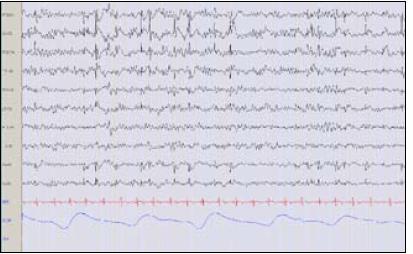
Continuous Spikes and Waves during Slow
Sleep
May occur spontaneously
May be induced by AED
Carbamazepine ++, Gabapentine, Phenytoin, Valproate, Oxcarbazepine
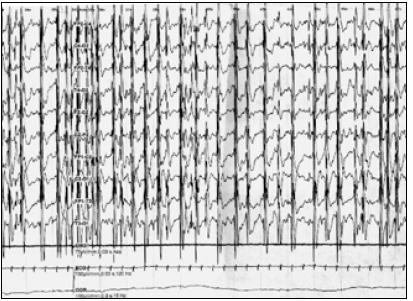
Oxcarbazepine and BECTS
Long-term use of oxcarbazepine oral suspension in childhood epilepsy: open-label study (Rufo–Campos et a., J Child Neurol. 2006)
62 patients (2 months – 14 years old)
- 80.6% reduced seizures ≥ 50%,,
- 71% reduction in seizure frequency ≥ 75%
- 46.8% seizure free at tthe end of tthe sttudy.
- Adverse event: 6,4%
Coppola et al., Brain Dev. 2007
Levetiracetam or oxcarbazepine as monotherapy in newly diagnosed benign epilepsy of childhood with centrotemporal spikes (BECTS).
Tzitiridou et al. Epilepsy Behav. 2005 70 children with BECTS 18 months follow-up
- 74% seizure free (53% seizure free after first dose)
- 21% reduction of seizure frequency> 50%
- 7% no change
- No deterioration EEG :
- normalization 74%, Improvement: 19 %
- No Change 7%
- No CSWS, some patients had temporary marked activation of epileptogenic acti vity in sleep
Exacerbation during sleep Possible seizure exacerbation ?
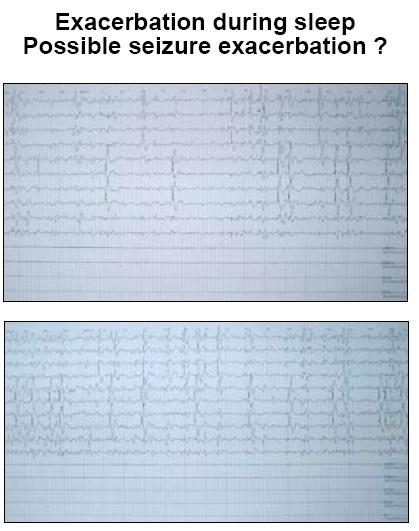
Oxcarbazepine and atypical evolution of benign idiopathic focal epilepsy of childhood.. Grosso et al., Eur J Neurol.2006 2 patients manifested atypical absences, neuropsychological disturbances, and generalized spike-and-wave discharges on EEGs that became continuous during sleep.
The third patient showed, during OXC therapy, more frequent partial motor seizures which ended with ictal vomiting and post-ictal obnubilation Vendrame et al., Epilepsiia 2007 (retrospective):
12 patients/290: worsening of preexisting seizures, new seizure types, and/or EEG deterioration EEG: new onset of generalized epileptiform activity (not reported on the initial baseline EEG) Following substitution of OXC with a broad spectrum AED, significant improvement of seizure control and improvement in the EEG was observed. Myoclonic seizures 2 cases reported by Kaddurah & Holmes
(2006 ) (16-year-old girl with 22q del, 23- month-old boy with global development delay)
1 case reported by Hahn (2004) (negative myoclonusdrop atacks boy with partial symptomatic epilepsy) Chapman (2003) in idiopathic focal epilepsy of childhood Juvenile Myoclonic Epilepsy :Gelisse et al., Epilepsia 2004
Experience in Amiens
Exacerbation of myoclonic seizures in Juvenile Myclonic Epilepsy: N = 3
Define the epileptic syndrome first !!
Exacerbation of myoclonic seizures in BECTS without CSWS: N = 1 Myoclonia and atypical absences in Atypical Benign Partial Epilepsy: N = 1
Less frequentt than with CBZ, TPM, VGB
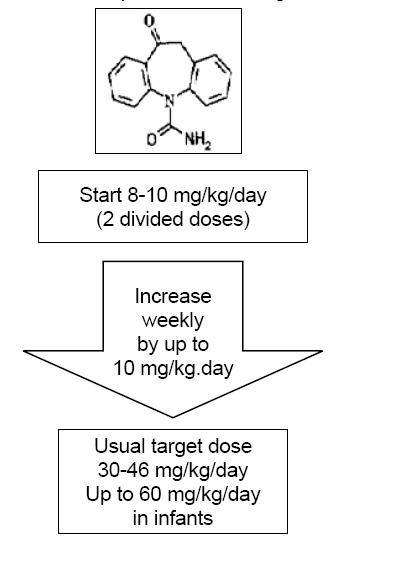
Oxcarbazepine Initiation
Oxcarbazepine:
- low propensity for drug interaction
- rapid titration
- no need for plasma monitoring
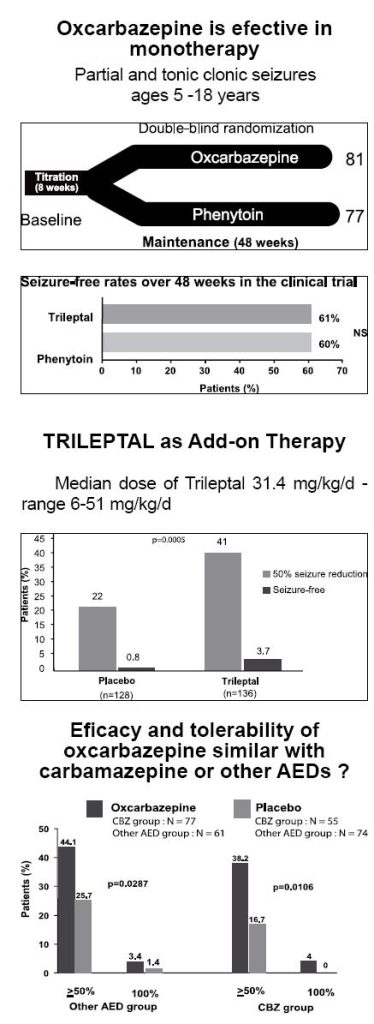
Oxcarbazepine is efective in monotherapy
Partial and tonic clonic seizures ages 5 -18 years
Trileptal and seizures in children. Open studies
Partial and generalised seizures N = 42 (> 4 years old) 6 months follow-up 87,5% seizure free
- 81,2% of partial epilepsies
- 91,7% of generalised epilepsies
Serdaroglu et al. Pediatr Neurol. 2003
Partial seizures N=40 (30 months to 18 y)
Cryptogénétic: N= 18 or Symptomatic: N= 19
- Seizure free: N= 13 35%
- seizure reduction ≥ 50%: N= 22 59,5%
- Idiopathic N=3: 100% Seizure free
Lamaa, EEC , Madrid 2002,
Khotare Paediatr Neurol 2006)
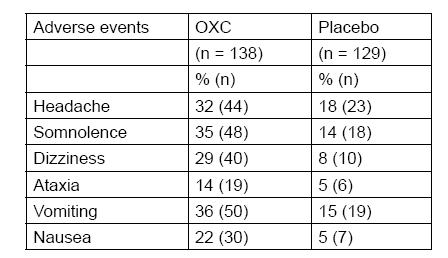
Oxcarbazepine tolerability add-on ttherapy Hyponatremia
Less frequent than in adults and usually mild (>125 mmol/l) 75 children: Holtmann neuropediatrics 2002
Natremia < 135 mmol/l: 26,6%
Hyponatremia < 125 mmol/l: 2 children
Hyponatremia clinically significant: 1 child
1/24 children: Northam et al. Pediatr Neurol 2005
Hyponatremia =124 mmol/l
Returned to normal after ↓ OXC from 60 to 30 mg/kg/d
Experience in Amiens:
2 temporary mild hyponatremia < 132 mmol/l
1 hyponatremia < 125 mmol/l in an infant
(9 months) seizure free: discontinuing OXC, relapse seizures
Global IQ and Cognitive functions
No significant cognitive deficit with advised dose in adults
Open label study: 99 children, 6 to 17 old-year newly diagnosed partial seizures neuropsychological test batery
FePsy computerized battery
Rey auditory Verbal Learning Test
Raven’s Progressive Matrice for children
OXC did not differ from CBZ or VPA
The cognitive effects of oxcarbazepine versus carbamazepine or valproate in newly diagnosed children with partial seizures
Donati et al., Seizure. 2007
Computerized Visual Searching Task (CVST) 112 patients randomised, 99 completed the study
Mean CVST time decreased in all groups:
- indicating an improvement of mental processing speed and no cognitive impairment in any treatment group
- No statistically significant difference was observed between oxcarbazepine and carbamazepine/valproate.
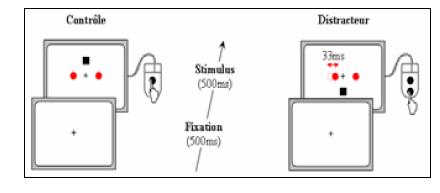
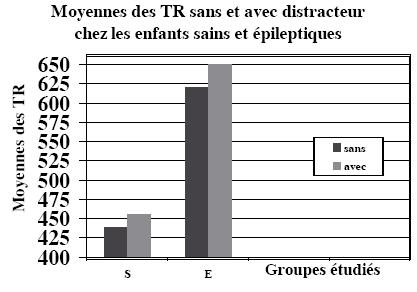
Moyennes des TR sans et avec distracteur chez les enfants sains et épileptiques
Reaction times are impaired Trileptal, Cognitive functions and behaviour
Tzitiridou et al. Epilepsy& Behav 2005
70 children with newly diagnosed BECTS WISC III, Illinois Test of Psychomottor Abilities, DSM-IV,, Bender-Santuci test
No impact on cognitive function when comparison was made
with 45 matched healthy controls
with baseline (before treatment)
Epilepsy in infancy < 2 years generalised epileptic syndromes
- Idiopathic epileptic syndromes in infancy
- Non frequent, good outcome
- Benign myoclonic epilepsy in infancy
- Symptomattiic and cryptogenic epilepsiies
- Often refractory epilepsy
- Dramatic effect on brain development
- West syndrome
- Dravet syndrome
- Epileptic syndrome associated with encephalopathy
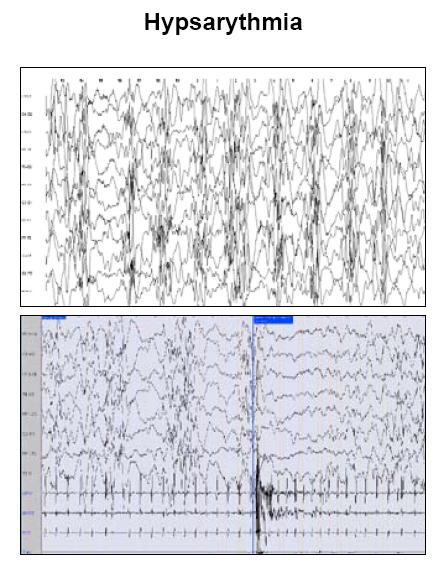
Vigabatrin: 100-150 mg/kg/d
Steroids (hydrocortisone,ACTH)
Topiramate
Nitrazepam, Clobazam
Valproate ??
Epilepsy in infancy < 2 years
- Partial seizures are underestimated
- Usually brief seizures
- sometimes occuring in cluster
- motor arrest, eyes and head deviation
- Symptomatic partial or multifocal epilepsies
- Often complex partial seizures
- Benign Infantile Convulsions: not so rare !
- Benign Familial Infantile Convulsions
- Infantile Convulsions and Choreo-Athetosis
- Partial benign non familial seizures (Watanabe)
Short duration of treatment.
- AED first line therapy
- Avoid phenobarbital and phenytoin (except in emergency and for a short time)
- Vigabatrin for spasms
- Valproate
- Clobazam and clonazepam (add on)
- Carbamazepine (avoid before 1 year)
- Oxcarbazepine
When efficacy is quite similar always take in account Tolerability and Safety
Trileptal efficacy in infants and young children:
- Patients 1 month to < 4 years old (N=128)
- Partial seizures (ILAE Classification)
- One or 2 seizure–type
- At least 3 electro-clinical seizures during a 3 days video-EEG
- Add on therapy: 1 or 2 other AED
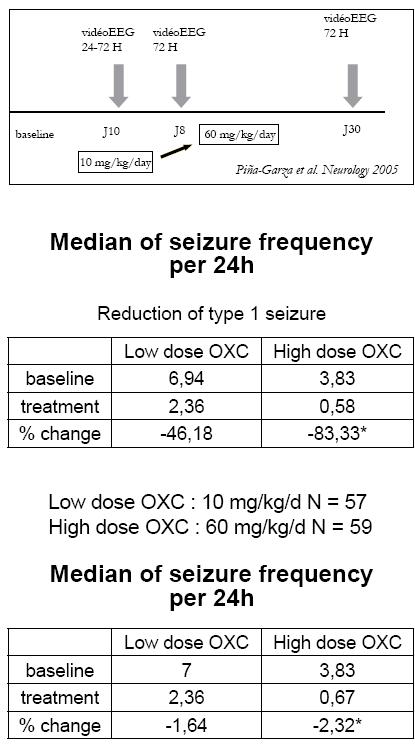
OXC in monotherapy or adjunctive therapy
24 infants with Partial seizures 1 month to<4 years of age (> 3 kg)
Newly diagnosed or not controlled epilepsy
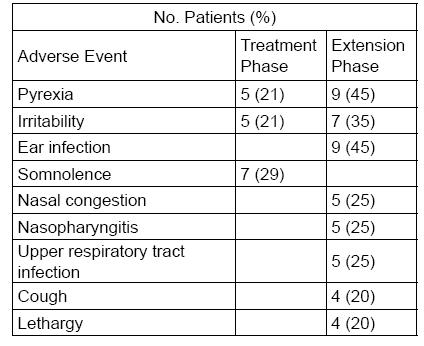
Experience in Amiens
- 15 infants 1 month to 4 years old with reffractory partial seizures
- Several seizures per day (up to 9O seizures/day)
- Seizure free: 4
- Seizure reduction > 50 % : 7
- No change: 4
- Tolerability
- Irritability: 1
- Lola: 8 months: Brief right hemiclonic seizures (30 to 90 seizures/d) Refractory to PB, PHT, CBZ, VGB


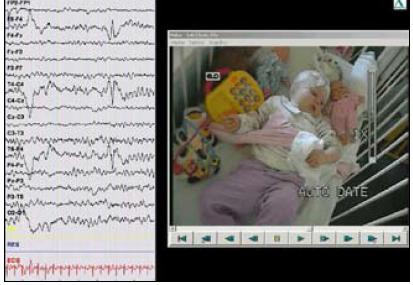
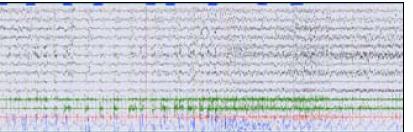
- Trileptal 60mg/kg/day: seizure free one month later (3 days video-EEG monitoring)
- Remain seizure free for 22 months
- Then, relapse a few seizure per week
Follow-up: MRI normal, taylor dysplasia suspected
- Deep intracranial EEG performed: epilptetic focus include central area
- Oxcarbazepine + Levetiracetam
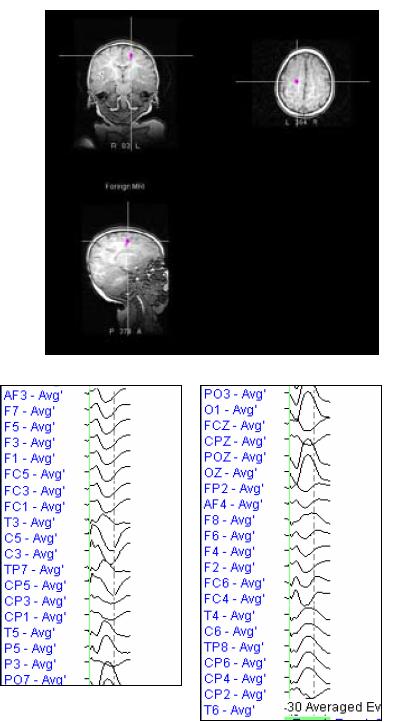
Localisation de source par la méthode de Dipol Fit sur modèle réaliste
Maximilien
- 14 months, Tuberous Sclerosis
- complex partial seizures
- secondary generalised seizures (No infantile spasms)
- 2 to 4 seizures per day
- Refractory to Vigabatrin, Sodium Valproate, Clobazam
- Trileptal 60 mg/kg/d (add on with VGB then monotherapy) seizure free during 2 years

Probable spectrum of new AEDs in childhood epilepsies Summary
Trileptal improves seizure control in children as young as 4 months and is equally effective whether added to carbamazepine or any other AEDs
Trileptal is safe and well tolerated in children Effective in non idiopathic epilepsies: in partial, tonic and tonic-clonic seizures not effective in absences and myoclonia Generalised Idiopathic epilepsy : rather not (absences, JME) Partial Idiopathic epilepsy (BECTS) : most often ffective but unfrequent worsening need to be aware